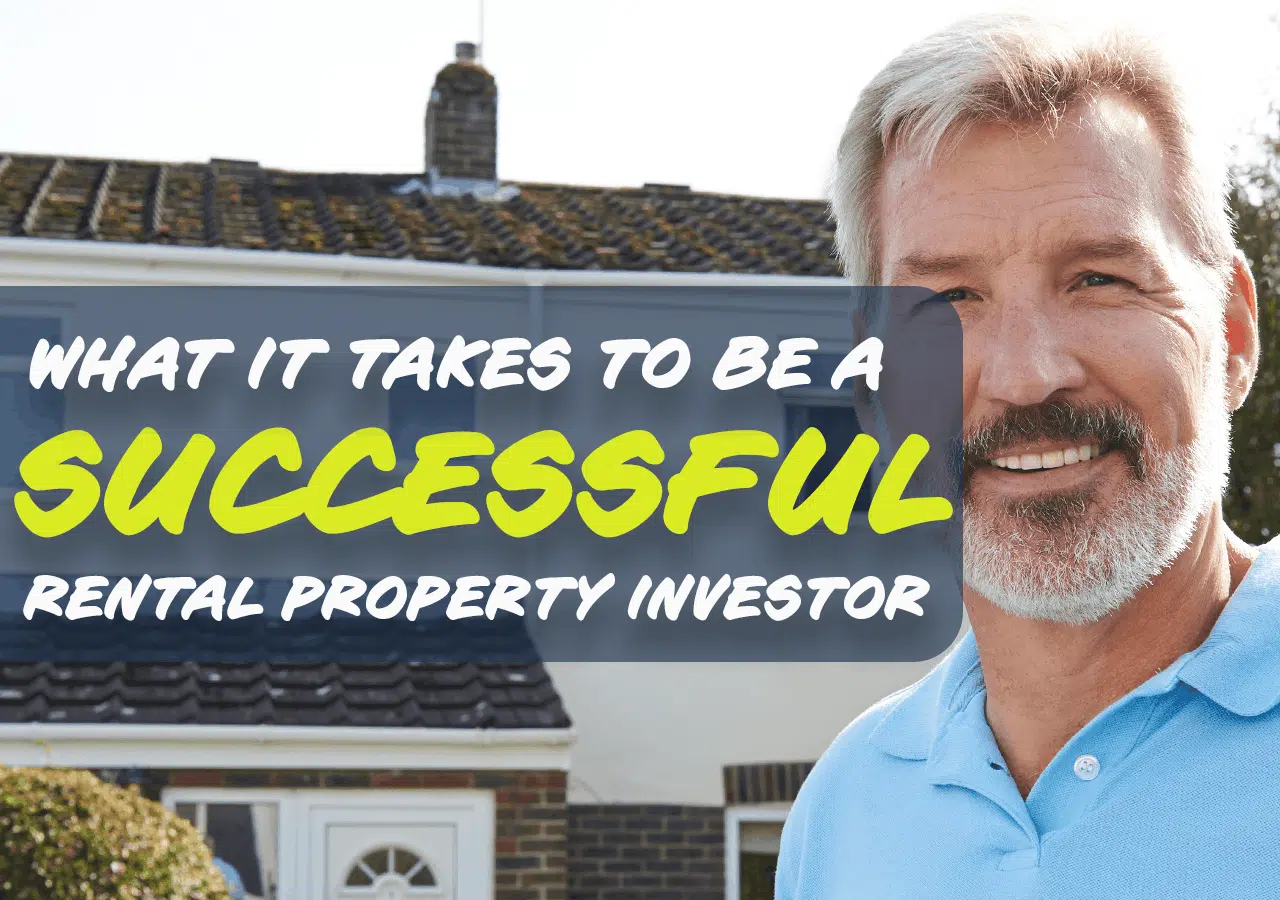
What It Actually Takes to Be a Successful Rental Property Investor

Rob Brooks
Rob Brooks is a realtor and property manager. He owns rental property in this market and has been investing here since 1994.
“You just need the right property at the right price, and you’ll make money as a real estate investor.”
Most people assume that successful real estate investing is about the right property.
The correct answer is that it’s about being the right person with the right mindset.
I’ve helped manage hundreds of properties, have many investments of my own, and know many, many real estate investors in Florida.
It’s really not about the property, because if this were the case, everyone with access to a calculator and a spreadsheet would be a real estate tycoon.
Success in real estate is a mindset with identifiable attributes. I’ve observed seven key attributes that successful real estate investors have in common.
Patience
This is the #1 most important skill, but also the one most people will ignore. Real estate is a long-term investment, which sounds obvious, but you would be surprised at how many people forget this fact. Most of your return will be realized years and years later, when the mortgage is paid off or when you eventually sell.
Most people understand this in theory, but cannot stomach it in reality. You must audit your own internal fortitude on whether you are ready to accept this type of time horizon. You might get some cash flow early on, but the biggest payoff is down the road. This is highly related to delayed gratification (another key real estate skill).
Trust
Trust is the #2 most important skill for real estate investors. You need to be trustworthy and surround yourself with people you can trust. You cannot be in all places at all times, and you need to know your vendors, management, and partners will operate with integrity when you aren’t around.
By surrounding yourself with trustworthy people and learning to trust them, you can also avoid becoming a helicopter landlord. This is a common mistake we see in the military landlord community. Members of our armed forces tend to be a bit more “Type A” than your average civilian and want things done correctly. This leads them to look over the shoulder of vendors and their property management company. This creates weird situations for both tenants and the people they pay to help them grow their investment.
RELATED: 6 Common Mistakes First-Time Military Landlords Make and How to Avoid Them
It’s much like looking over a mechanic’s shoulder. If you were to look over that mechanic’s shoulder the entire time they are servicing your Toyota, chances are you’re going to distract them. They’re not focused on their game if they’re focused on you. (And you probably don’t know as much as they do, which is why you hired them in the first place. Let them do their job!)
One time, we had an owner who demanded eight estimates for a fence repair instead of trusting the one to two options we recommended. In the end, the original estimate we provided was the lowest, but it cost everyone weeks of delays and 20-30 hours of wasted time across contractors and the owner.
Pick trustworthy people to be on your team, and force yourself to trust them.
Money
Capital is the #3 most important thing you need as a real estate investor. You need dollars to start in real estate.
Let me say that again: You need dollars to start in real estate. This is one of the biggest initial hurdles to real estate investing, and it’s a reason very few people get into this type of investment vehicle. The capital demands and barriers to entry are much higher than those of stocks or mutual funds.
However, it doesn’t take as much money as many people believe. All cash deals are ideal, but you can have a successful, low-risk investment with 20% down on the right property.
So, how do you get cash to invest? You may need to forgo some things in life in order to save up the money for this type of investment. This is also related to the concept of delayed gratification.
Cash reserves are underdiscussed and should be mandatory when investing in real estate. Landlords who don’t have a bank account set aside for emergencies and repairs are setting themselves up to lose everything. Hear me: something bad will happen at your property at some point. You need to be ready to pay for these problems. AC units go out, water heaters stop working, leaks happen, storm damage can tear off roofs, and all sorts of other chaos can ensue. Plan for it in advance.
We have dropped property management clients in the past for failure to maintain proper reserves. A few years ago, we had an oven break down in a property we were managing, and the owner rejected all our suggested replacement options. Instead, they installed a portable countertop appliance (essentially a glorified pizza oven) instead of a proper oven. The tenant was very upset and left a bad review online for our management company. We decided it was time to drop the owner as a client, because we were not going to participate in treating a tenant this way.
Cash is king, and cash reserves will keep you out of a bind.
Delayed Gratification
Delayed gratification is the #4 most important thing in real estate investing. And really, this is how you build the capital to invest in the first place. Driving an older car, eating a lot of rice and beans, not buying the boat, eating out a little less than you’d like, and living in a smaller home than you could afford. This was my personal experience as a young man getting into real estate investing.
This discipline continues even after you buy the property. If the property isn’t cashflowing right away, you’re once again exercising delayed gratification, waiting for a return that happens in the distant future. This is the nature of all investments, but especially real estate. Real estate is a very profitable investment, but it is long-term. In order to make it profitable, you need to be patient and hold.
Patience and delayed gratification can also help you overcome less-than-ideal deals. Back in 2006, I purchased a property that turned out to be above market value. A few months later, I was talking to a friend of mine about the situation, and it became clear from the expression on my friend’s face that he thought I had closed a losing deal. Five years later, this same friend saw the appreciated property value and higher rents and thought I was a financial genius. Of course, I’m not a financial genius. I just knew real estate investing is best done over the long haul. His takeaway: “No, not a financial genius, just knowing that real estate investing is best done over the long haul.”
If you wait long enough, real estate should be a great investment.. You might have to wait a long time. Market forces are in your advantage: the population keeps growing, there’s always more demand, and the supply of land is limited.
Delayed gratification is both the entry fee and the ongoing mindset for good real estate investing.
Emotional Stability
Emotional stability is the #5 most important attribute a real estate investor needs.
This is a question every potential landlord needs to ask themselves: Emotionally, are you able to handle having your investments at risk and under the control of forces outside of your control? As an example, can you handle a property management company dealing with the day-to-day operations without worrying?
Your job is to find an investment that you won’t think about every day. Don’t spend your energy and life worrying about it.
This view is grounded in my faith. The Bible is very clear that we are called not to worry. We will be cared for if we trust in the Lord. We don’t need to worry about our investments either.
Emotional stability is a skill that we require of our professional property managers, too. Tenants will call your phone and describe a genuine hardship they are dealing with (cancer, death in the family, job loss) and will ask to pay late or pay less. An emotionally soft landlord will say yes. However, the trap here is that the situation will never last just one month. In 98% of cases, the problem will continue, and you will be stuck footing the bill.
Our job as property managers is to serve as a wall of separation to protect the landlord from these emotionally charged situations. When this type of call comes in, our team is trained to be empathetic, but to be consistent. The tenant then turns to more appropriate sources of help, like a relative, a church, or a government program.
Risk Tolerance
Risk tolerance is the #6 most important skill that an investor needs to be successful. A landlord needs to know and accept that there’s a possibility that things won’t turn out as hoped. You must be OK with this as a possible outcome. Investing always requires risk, and usually the higher the upside, the greater the risk. If losing the property would be devastating to you and your family, real estate investing may not be for you.
Generosity
Generosity is the #7 most important skill for a real estate investor. Contrary to popular belief, a landlord does not exist to squeeze every dollar out of their tenant. Real estate involves caring for real people and real families in your property. I want my tenants to feel good about the value they are getting from the rent they are paying. I don’t need to charge the tenant the absolute most I can squeeze out of them.
Generosity also extends to how you pay your maintenance vendors. They need to earn a fair amount for the work they do, and paying your maintenance vendors well tends to attract better quality technicians.
You should try to be a generally giving person. Not reckless or in a way that endangers your investment, but just someone who understands that people need to be paid and people need to be charged what is fair.
A Final Word
Real estate investing requires a patient, discerning mind. Rewards are reaped in the scope of decades rather than months or years. You don’t have to master all seven skills on day one, but if you’re honest with yourself about where you stand on each, you’ll have a much clearer picture of whether you’re ready to invest.
P.S.
We offer free rental analysis if you are curious about the profitability of your situation. If you’re looking for a good property management partner in the Florida panhandle area, reach out to us!
Investing in Far West Pensacola: A Neighborhood Guide with Rob Brooks

Start a conversation with our team
Let us help you think through the best strategy for your property. Get in contact with our property management team today.