
Investing in Far West Pensacola: A Neighborhood Guide with Rob Brooks

Rob Brooks
Rob Brooks is a realtor and property manager. He owns rental property in this market and has been investing here since 1994.

A conversation with Rob Brooks of Rob Brooks Realty Property Management. Rob has 28+ years in the business, is an active investor, and a property manager serving the Pensacola area.
Far West Pensacola is anchored by Naval Air Station Pensacola and stretches out to the beaches of Perdido Key. For investors, it has quietly become one of the more compelling pockets in the are, as it has a lower price-per-square-foot than East Pensacola/Spanish Trail, a steady military tenant base, and a rent-to-price ratio that’s now outpacing the east side. In this FAQ, Rob Brooks breaks down the geography, what drives rental demand, how to think about flood risk, and where the real investment value tends to sit.
Questions & Answers on Far West Pensacola
Where is the Far West Pensacola neighborhood?
It helps to start with a little history. Pensacola largely began near the downtown area and spread out from there — north at first, then quickly to the west because of the naval air station influence. As the military presence grew out toward the mouth of the bay heading to the Gulf, so did the growth. Today, Far West Pensacola comprises the zip codes 32506 and 32507, with Naval Air Station Pensacola sitting about 15 minutes southwest of downtown. At the very western edge is Perdido Key, which has a strong beach feel as you’d expect.
How does this area compare to East Pensacola and the rest of the area?
West Pensacola has a little more of a down-to-earth feel, and prices per square foot are generally lower than in East Pensacola. The east side has traditionally been the more desirable spot — it’s closer to downtown, the hospitals, and the airport, while in a lot of West Pensacola you’re getting in the car and driving 20 to 25 minutes to reach those things. More affluent buyers often lean east, but the trade-off is simple: you can get more house for your dollar in the west. The street layout and architecture in much of Far West Pensacola also feel a lot like Navarre, since both areas grew at a similar rate over the past three or four decades.
What’s the housing stock like?
There’s a soft divide. Many of the older homes sit between downtown Pensacola and the Naval Air Station, in areas like Warrington and Middle Grove. As you drive past the base toward Perdido Key — or up around 98th — you start getting into a lot of newer homes. “Newer” here looks a lot like Navarre-style construction, with similar floor plans and build quality, because both areas developed over the same few decades.
How significant is NAS Pensacola to the rental market?
It’s central. Something a lot of people don’t realize is that every naval flight student goes through Naval Air Station Pensacola. If you’re going to fly in the Navy, you’re stationed here for training — so there’s a constant stream of students, plus all the personnel needed to maintain the planes, runways, and everything else happening on base. It’s a transient presence, though: most aren’t here more than two years. They come in, get trained, and move on, and a lot of them are young.
What are military tenants like as renters?
In Rob’s experience renting to these pilots and flight students over the past decade or two, they tend to be good keepers of the properties. The reason is simple — they don’t have time to party. They only have time to eat, sleep, fly, and study their flight books. That’s it, every day. It’s a demanding stretch of life for them, but it keeps wear and tear on a property very low.
How long do military tenants usually stay?
It depends on the track. Fixed-wing students — the normal planes — tend to be in and out a bit quicker, often around 18 months. Helicopter students tend to stay in the area longer, frequently past two years. So lease length and turnover vary depending on where a tenant is in their training pipeline.
Are active and retired military two different renter profiles?
Yes. Far West Pensacola also draws a lot of retired military, largely because it’s such a nice place to live. Many moved through the area as students, finished their careers, and wanted to come back. The veteran hospital on the Pensacola NAS base and access to the commissary are big draws. Retired veterans are generally more interested in enjoying the area’s amenities — getting to the beach, fishing, and exploring Perdido Key and the lagoon — whereas active-duty tenants are more focused on quick access to the base.
How should an investor evaluate flood risk out here?
With a hurricane, there are really only two things to worry about: wind and rising water. Wind is mitigated by a strong structure, but you can’t do much to a house to protect it from rising water short of raising the entire home, which does happen along the coast but is rare. So elevation is everything — not proximity to the water, which is what a lot of people fixate on. You can be 50 feet from the water at a high elevation and have nothing to worry about. The areas just south of Gulf Beach Highway tend to sit a little lower, so do your research there. As a rule of thumb: above 15 feet of elevation and you’re in good shape against storm surge; below 10 feet is a major concern. Insurance exists for rising water, but even with it you could be out of the house for several months during a rebuild, so it’s worth checking elevation carefully before you buy.
Is flood insurance a deal killer?
Not really. Every house is sellable — there’s no such thing as a home that simply can’t move. A property with very low elevation will just sell for a lower price and carry higher returns, and that’s a trade-off the right buyer will accept when the purchase price reflects the risk.
What are typical entry prices and rents here?
The newer, bigger homes west of NAS Pensacola tend to sell for a little more. The smaller, older homes northeast of the base — between NAS and downtown — tend to run a bit lower. On the rent-to-price side, here’s the interesting part: median sale prices in 32506 and 32507 are running close to $300,000 right now, which is about the same as East Pensacola’s 32503 and 32504. But median rent in West Pensacola is around $1,800 a month, versus roughly $1,700 in the east. That higher rent on a comparable sale price means a better return for an investor buying in the west — which is a shift from how things looked in the past.
Two important caveats. First, that $300,000 median is skewed upward by $500K–$1M owner-occupant and officer sales; the homes you’d actually buy as rentals are well below $300,000. Second, West Pensacola prices tend to be a little more volatile — more up and down — than the more stable east side. But right now, on the rent-to-price ratio, the west is outpacing the east.
What’s Rob’s ideal buy in this area right now?
A three-bedroom, two-bath home with a one- to two-car garage, ideally under $250,000, in an area that looks nice to walk your dog and isn’t too far from NAS Pensacola or Perdido Key. The garage matters more than you’d think — a lot of these military tenants have a nice car they just bought and want to keep it covered, and young families need the bedrooms. That three-bed, two-bath, garage combination hits the sweet spot for the renter pool out here.
What does this part of Pensacola look like in 10 years?
There’s still a lot of development happening, with D.R. Horton and other large builders putting in subdivisions. All that new supply keeps prices a little lower for now. But eventually those subdivisions will be built out, and as that happens, prices in the area should start appreciating.
What’s the one question Rob wishes more investors would ask?
Rob’s favorite question is a little philosophical. The best thing an investor can ask a property manager or experienced investor isn’t “where should I buy?” — it’s “what qualities do I need to have as an investor?” Not everyone is cut out for real estate, though it can be learned. It’s less about knowledge of a specific area and more about the heart of it: Are you okay taking on some risk? Can you let others do their job managing a property for you, or are you a micromanager? If you’re a micromanager, that doesn’t mean you shouldn’t invest — maybe you should be your own property manager — but then it becomes a real job, and you have to have the time to do it well. Rob has written an article on what it takes to be a successful property investor that’s worth reading on this topic.
Thinking about Investing in Pensacola?
Whether you’re weighing Far West Pensacola, Perdido Key, or another Pensacola neighborhood, Rob Brooks Realty Property Management can help you evaluate the investment case and manage the property once you own it.
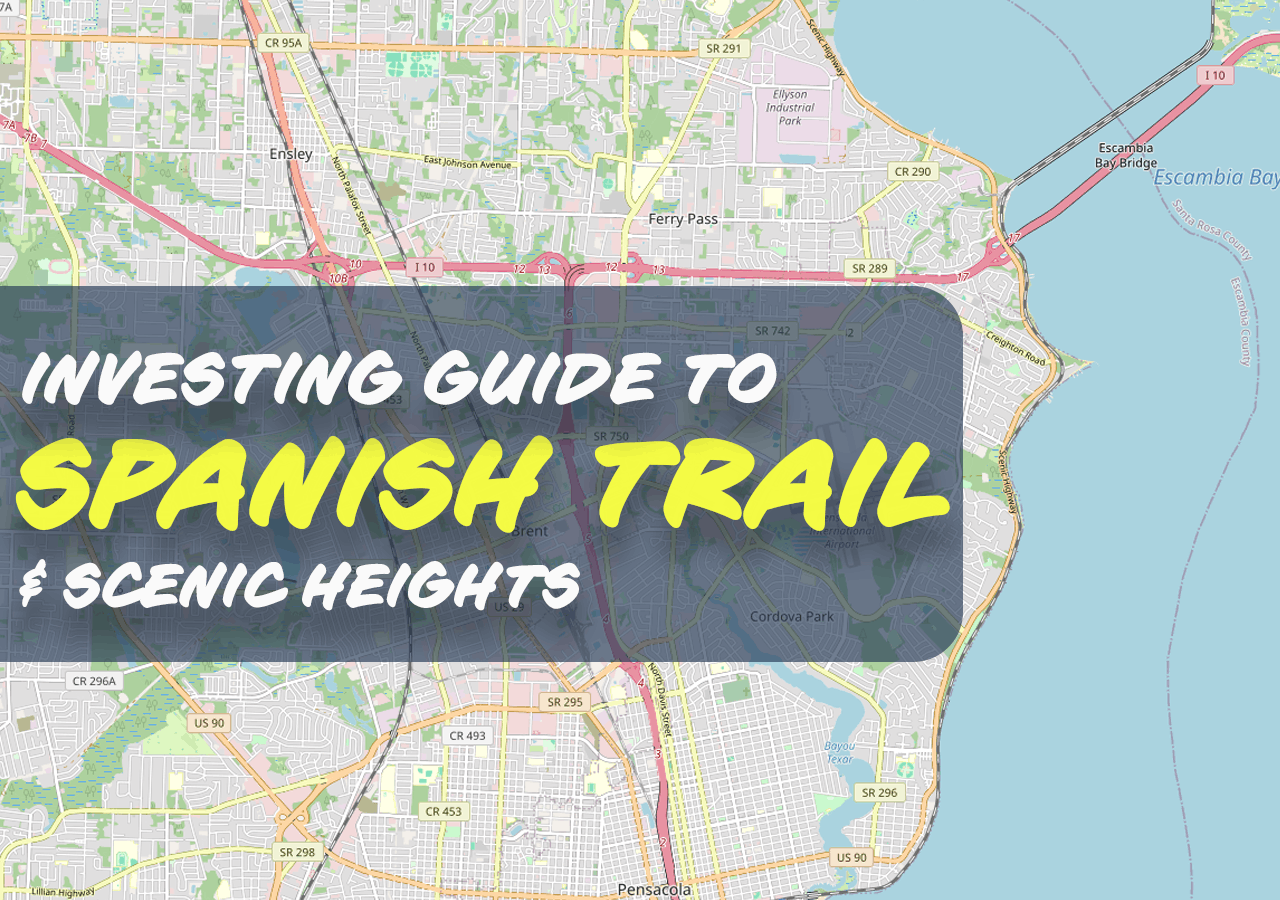
Investing in Scenic Heights & Spanish Trail, Pensacola: A Neighborhood Guide with Rob Brooks
Start a conversation with our team
Let us help you think through the best strategy for your property. Get in contact with our property management team today.